AQC Digital Integration — MES, LIMS & Instrument Automation
An enterprise-scale GMP digital integration program that automated Analytical Quality Control workflows by enabling bidirectional orchestration across MES, LIMS, and analytical instruments — eliminating manual touchpoints, strengthening traceability, and accelerating batch release readiness.
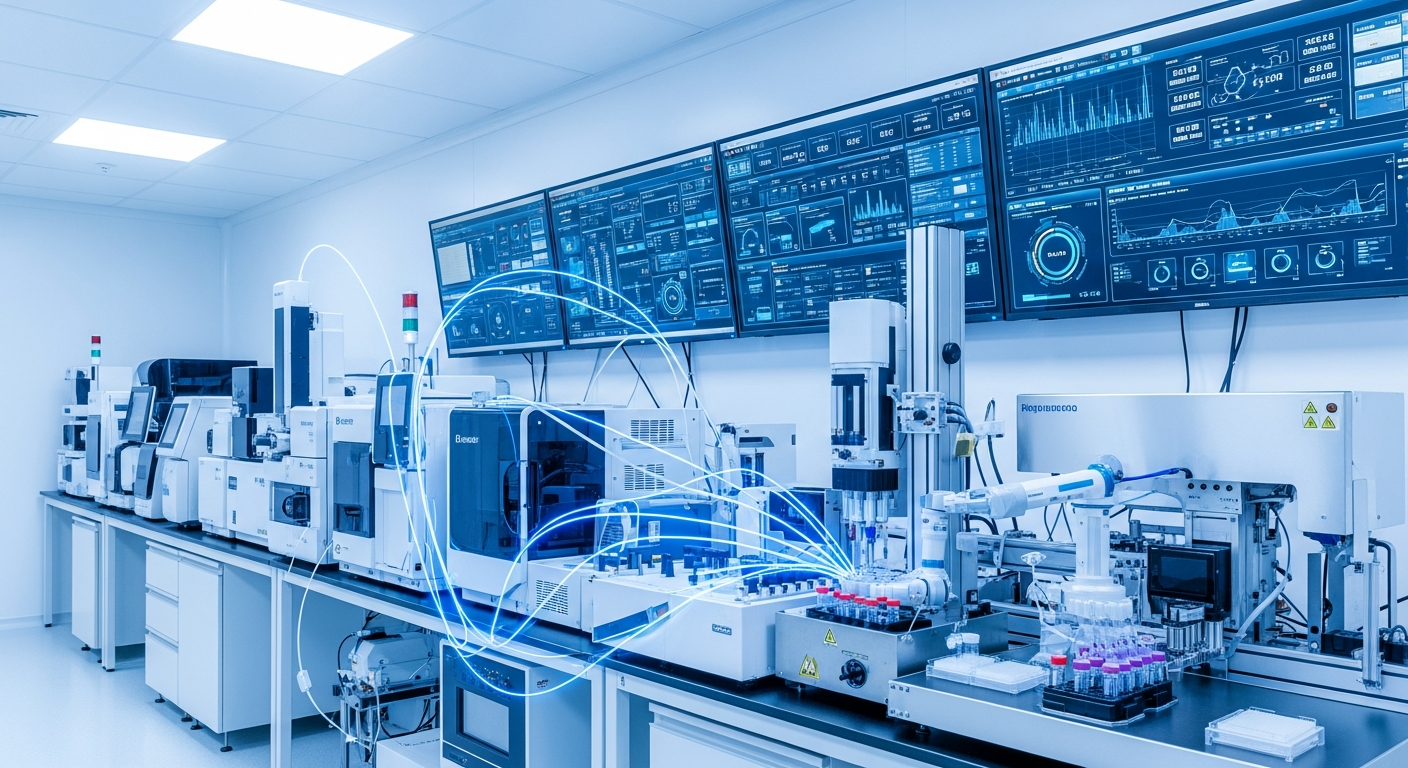
End-to-end data flow — no manual handoffs



Manual data handling in a GMP environment creating risk and delay
In GMP-regulated biopharma manufacturing, manual data entry across disconnected systems — MES, LIMS, and analytical instruments — was creating significant compliance risk, reconciliation overhead, and delays in batch release readiness.
With multiple instrument platforms generating outputs in different formats, no standardised integration layer, and strict ALCOA+ requirements, the organisation needed a validated, scalable automation solution that met regulatory standards without compromising delivery timelines.
Key Challenges
Manual sample and result data entry across MES, LIMS, and analytical instruments
Multi-system orchestration across instrument platforms with different vendor standards
Complex output file formats — XML, CSV, and vendor-specific structures
Strict ALCOA+ data integrity and GMP regulatory compliance requirements
Instrument qualification windows (IQ/OQ/IOQ) creating timeline constraints
Cross-functional governance across QC, Quality, IT, Automation, and external vendors
Timeline compression — parallel instrument onboarding tied to manufacturing launch
Key Requirements
Bidirectional orchestration: MES → LIMS → Instruments → LIMS
Automated sample ID, worklist, and method parameter push to instruments
Secure file capture, transformation, and automated LIMS ingestion
ALCOA+ compliant audit logging and end-to-end traceability
Exception handling, error routing, and QC review workflow support
Scalable onboarding architecture for future instrument expansion
A validated, bidirectional integration pipeline
We delivered a standardised digital integration layer that automated the complete AQC workflow — from sample initiation in MES through to QC review and batch disposition in LIMS — with full GMP traceability at every step.
Bidirectional Orchestration
End-to-end data pipeline: MES → LIMS → Instruments → LIMS — fully automated, no manual handoffs
Sample & Worklist Automation
LIMS pushes sample IDs, test methods, parameters, and worklist structures directly to instruments
Results Capture & Transformation
Automated capture of instrument outputs (CSV/XML/vendor formats), normalised and ingested into LIMS
GMP & ALCOA+ Compliance
Full audit logging, traceability, and controlled processing patterns aligned to regulatory requirements

Exception Management
Automated error routing, validation rules, and exception queues to handle edge cases without manual intervention
Scalable Onboarding Architecture
Standardised mapping templates and vendor playbook enabling rapid onboarding of additional instruments
Measurable gains across compliance, efficiency, and throughput
Financial & Operational ROI
Operational transformation
Manual sample logging, method entry, and result reconciliation — previously performed by lab staff at every instrument — were fully automated. QC results became available in LIMS shortly after run completion, dramatically reducing the time from instrument output to batch disposition decision.
Scalable foundation built
Standardised mapping templates and a vendor onboarding playbook reduced the effort to integrate each additional instrument by ~40%. The architecture was designed from day one to scale across instrument types, sites, and future manufacturing expansion.
Facing a similar challenge?
Our architects understand GMP environments, validation constraints, and the complexity of enterprise lab system integration. Let's talk.